By Ramadhani Kupaza
Environment & Development Consultant
+255784892338
Tanzania provides tourists with a reference for starting fascinating debates on the processes that have led to the creation of the human component of the universe, including the protection, survival, and continuity of the human component. In particular, Tanzania provides a reference for debates on human origins, survival, and continuity irrespective of the tourists’ faith inclinations.
Of interest to these debates is the scientists’ proposition that humans and chimpanzees originated from common ancestors known as Miocene apes. Miocene apes existed primarily in Africa, Europe, and Asia. This explanation clarifies the debate that chimpanzees are not human ancestors, although they share 98.8% of their DNA with humans. Tourists can observe chimpanzees at Gombe Stream National Park and Mahale Mountains National Park in Tanzania. Miocene apes existed approximately 5.3 million years ago.
Other groups of animal species appeared after the Miocene apes before the appearance of the group known as Homo habilis. Animals in the Homo habilis group are known for their increased brain size and were the first regular users of stone tools. Findings of Homo habilis fossils at Olduvai Gorge have established East Africa as the origin of humankind. Modern humans belong to the Homo habilis group of animals, according to science. Tourists can visit Olduvai Gorge in Tanzania to observe the remains of Homo habilis fossils. Animals in the Homo habilis group lived approximately 2.4 million years ago.
Another fascinating debate concerns how the Homo habilis group of animals spread to other places in the world from East Africa. The recent discoveries of modern human fossils at Jebel Irhoud in Morocco imply that humankind may have evolved from locations such as Europe and Asia independently, rather than from one location, which was previously believed to be East Africa at Olduvai Gorge. Tourists can seize the opportunity to investigate and bridge the gap in knowledge with regard to the scientific view of the origin of humankind across various continents.
After establishing the origins of humankind from the scientific perspective, the next debate concerns how humankind survives through generations. The basis for the immediate survival of humankind is the availability of food. With reference to food availability, Tanzania produces much of the food required for its population. Tourists can visit plantations cultivating fruits, grains, spices, vegetables, oil palms, and legumes for protein. In terms of animal protein, Tanzania ranks second in Africa after Ethiopia with regard to the total number of livestock. Tourists can observe large numbers of free-ranging livestock as they travel through the northern part of the country.
With regard to protein from fish, Tanzania is among the top ten fishing nations in Africa, with a focus on inland fisheries. The main inland fishing sources are Lake Victoria, Lake Tanganyika, and Lake Nyasa. This means that Tanzania can serve tourists with a wide variety of fish from both the Indian Ocean and freshwater lakes and rivers.
These three lakes are major sources of water for Tanzania and for neighboring countries such as Uganda, Kenya, Egypt, and Sudan. Therefore, it can be argued that the survival of humankind through generations is supported in these countries through the availability of freshwater resources.
In addition, Tanzania has a significant number of tea and coffee plantations. Tourists can visit coffee and tea estates in the northern, eastern, and southern parts of the country.
In terms of the continuity of humankind, science proposes an orderly world in which proactive efforts are made to conserve pristine natural resources such as land, plants, water, and air across generations. The protection of the natural environment forms the basis for ensuring the continued survival of humankind through future generations.
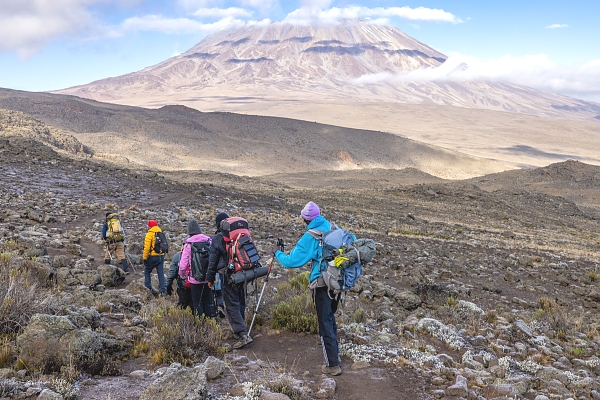
Tanzania has set aside approximately 40% of its land area for conservation. Debates on conservation issues can serve as platforms for sharing information on effective conservation approaches, particularly in light of increasing conflicts between conservation and livelihood practices. Tourists can visit Tanzania's protected areas, including national parks, game reserves, multiple-use conservation areas, wildlife management areas, forest reserves, marine parks, marine reserves, lakes, rivers, wetlands, grasslands, woodlands, rift valleys, and mountains.
The plants in these protected areas contribute to the continuity of humankind because they absorb carbon dioxide and help maintain clean air in the atmosphere. Plants act as carbon sinks, removing carbon dioxide produced by human activities. Carbon dioxide is a major contributor to climate change and its negative effects on the survival of living organisms, including human beings. Also important for continuity is the fact that worn-out biological components of the universe are recycled, enriching existing and new physical, chemical, and biological processes across generations.
That concludes the account of the human component of the universe from a scientific perspective.